There’s a moment that may seem familiar to you.
You’re in a meeting—maybe with Legal, maybe with Finance, maybe during due diligence—and someone asks:
“Can we walk through the ownership structure?”
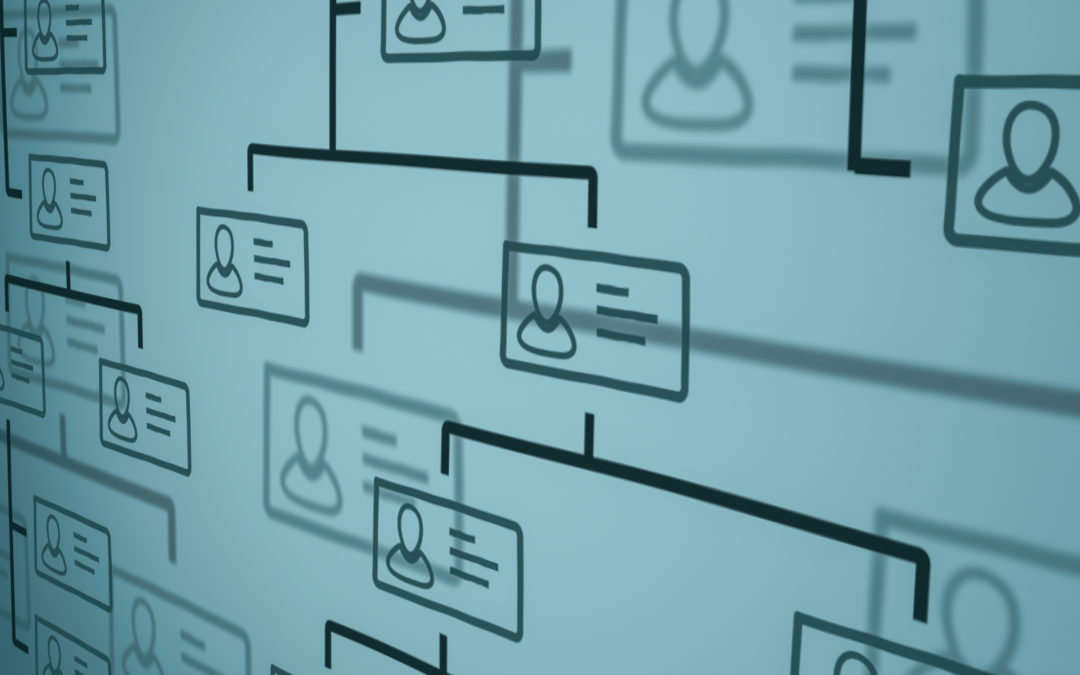
A chart gets pulled up.
It looks clean. Organized. Thoughtful.
And then, almost immediately:
“Wait… is this still accurate?”
That hesitation is the real story.
Because for a lot of organizations, the org chart isn’t a source of truth.
It’s a snapshot.
A product of many edits, based on information that’s been passed down the line.
It usually represents a false sense of confidence.
The problem isn’t that you don’t have an org chart
The problem is that the org chart:
- Was built manually and is edited manually, often by different people
- Lives outside your system of record
- Isn’t updated when the underlying data changes
So it slowly drifts.
A new entity is added to the organization—not reflected.
Ownership shifts—not updated.
A restructuring happens—someone says, “We’ll update the chart later.”
And later rarely comes.
Why this becomes a real risk (not just an inconvenience)
At first, it feels like a nuisance. Rushing to update a slew of changes at the last minute.
But over time, it becomes something more serious:
- Compliance teams unwittingly rely on outdated structures
- Legal spends precious time reconciling discrepancies
- Finance and tax teams work from conflicting versions
- Due diligence becomes slower—and riskier
At a broader level, this reflects a larger issue faced by modern organizations:
When entity data is disconnected or incomplete, it introduces real governance and compliance risk.
And the org chart is often where that disconnect becomes visible.
Static org charts don’t reflect how organizations actually operate
Traditional org charts assume:
- Stability
- Linear ownership
- Predictable structures
But that’s not how modern organizations work.
Today, organizations manage:
- Multi-entity structures across jurisdictions
- Holding companies, SPVs, and blockers
- Frequent transactions and restructurings
- Layered ownership across multiple levels
- Complex investor and stakeholder relationships
Traditional org charts were designed for a simple, predictable world.
Modern organizations operate in a constantly evolving, complex one.
The traditional way of creating and maintaining org charts simply doesn’t keep up with reality.
The issue is you’re maintaining two systems
You already have one system with:
- Entity records
- Ownership relationships
- Compliance data
- Filing history
But then a second system is created:
👉 The org chart.
Now every change requires:
- Updating the entity data
- Updating the chart
- Making sure they match (and they usually don’t)
The larger the organization becomes, the wider the gap grows.
What changes when the chart is created from the data
The shift is simple, but meaningful.
Instead of manually building and maintaining a chart, you generate it directly from your entity and ownership data.
Thus, the chart becomes a reflection of your system of record rather than a separate document that must be maintained independently.
The result:
- Less manual work
- Fewer discrepancies
- Greater confidence in the information being shared
You’re no longer creating diagrams from scratch.
You’re building from the data you already manage.
It’s not about better diagrams - it’s about better visibility
The goal is to confidently answer questions like:
- Who ultimately controls this entity?
- Which entities are affected by a restructuring?
- How does ownership flow through the organization?
- What changes after a transaction closes?
Because without this visibility:
- Decisions slow down
- Confidence decreases while risk increases
- Teams work from assumptions instead of facts
And that’s where problems begin.
You shouldn’t have to constantly rebuild your structure
One of the biggest limitations of traditional org charts is that they’re fragile.
Every change requires manual effort.
Every scenario requires a new version.
Every audience requires a separate copy.
Modern organizations need something different.
They need the ability to:
- Explore ownership relationships
- Model potential changes
- Preserve historical views
- Create stakeholder-specific versions
This requires an org charge that’s current and based on your system of record.
Why is this important?
There’s no room for doubt or delay during:
- Audits
- Financings
- Acquisitions or dispositions
- Regulatory reviews
- Tax planning
- Investor reporting
- Board presentations
When people are relying on your org charts to make important decisions, you can’t assume it’s up to date and accurate
It’s a need across multiple teams
Because org charts are used to convey multiple levels of information, they’re used every day by
- Compliance teams managing reports and filings
- Legal teams papering transactions or managing diligence reviews
- Tax experts design for tax efficiency
- Deal teams negotiating transactions
- Finance teams managing capital calls and distributions
- Family offices overseeing complex structures
- Corporate governance teams maintaining corporate secretarial requirements
Because organizations aren’t static.
They’re constantly evolving.
How SingleFile Helps
Most organizations already have the information needed to understand their organizational structure.
The problem is that because the information lives in so many places, updates in one place don’t automatically trigger updates in an org chart.
Ownership relationships often exist across entity records, spreadsheets, PowerPoint diagrams, filings, and internal documentation. Every time the structure changes, teams are forced to determine which is the canonical record and then manually update everything else, including the charts. This entails reconciling discrepancies and recreating views for different audiences.
SingleFile’s Dynamic Org Charts eliminates this disconnect by transforming entity and relationship data already maintained within the platform into an interactive, living visualization.
Instant Generation from Live Data
SingleFile automatically builds ownership charts using the system of record for entity and relationship data, eliminating the need to manually draw and maintain diagrams.
Because charts are generated from the same data used to manage entities, teams can have greater confidence that what they are seeing reflects reality.
AI-Powered Chart Customization
Users can customize chart layouts and presentations using natural-language commands without impacting underlying legal records.
This allows teams to quickly tailor charts for specific purposes such as board meetings, diligence requests, investor reporting, and internal analysis while preserving data integrity.
Scenario Modeling and Historical Snapshots
Organizations can model potential restructurings, ownership changes, acquisitions, and future-state scenarios using separate chart views without altering the underlying data.
Important milestones can be preserved through snapshots, creating a point-in-time record for:
- Transactions
- Audits
- Financings
- Regulatory reviews
Focused Views and Secure Sharing
Large org structures can be filtered to display only the entities relevant to a specific project, transaction, or stakeholder group.
Teams can then export presentation-ready PDFs with redactions and password protection to support secure external sharing.
Ownership Visibility at Scale
Whether managing a private equity portfolio, venture fund structure, family office, or multi-entity enterprise, SingleFile helps transform organizational data into a clear, explorable structure that remains connected to the underlying source of truth.
The result isn’t simply a better org chart.
It’s a better way to understand, manage, and communicate organizational structures.
The Bottom Line
Traditional org charts are disconnected from current data, which is scattered throughout the organization.
The org chart stops being a tool and starts becoming a risk.
SingleFile’s Dynamic Org Charts change that. It connects your visualization to your actual entity and relationship data.
So instead of rebuilding charts, you start with a current, accurate org chart, which you can:
- Understand
- Explore
- Share
- And above all, trust
If managing your org chart is a pain point for you, we can help. Request a Demo to see how SingleFile turns ownership data into organizational clarity.
External References:
Stay compliant. Stay informed.
Get compliance updates, filing guides, and regulatory alerts from SingleFile.