
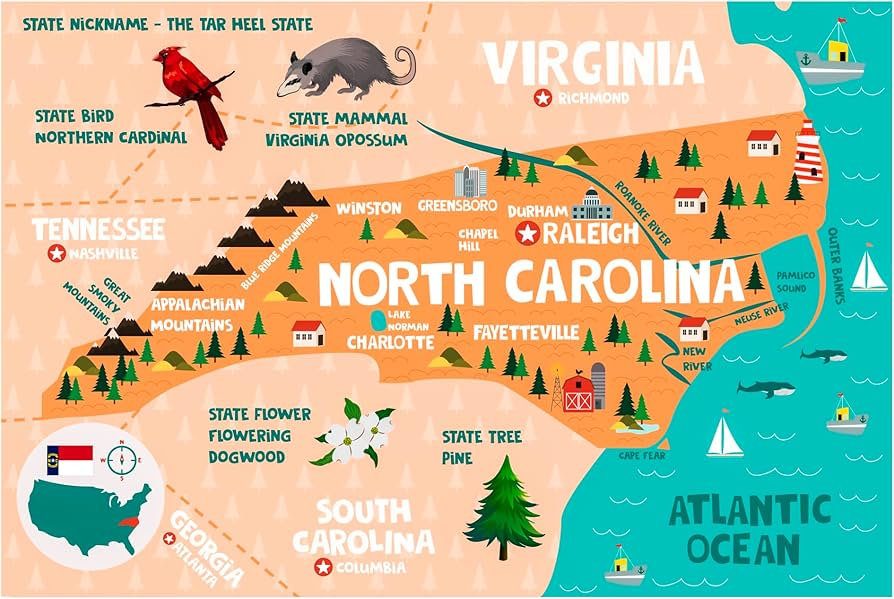
North Carolina has become an increasingly popular place to start and grow a business due to its:
-
Strong population growth
-
Business-friendly environment
-
Expanding startup ecosystem
Fortunately, forming an LLC here is relatively straightforward.
However, like most states, the real challenge isn’t creating the legal entity—it’s managing what comes next.
Why businesses choose North Carolina
For many companies:
-
Operations are local
-
Teams are based in-state
-
Financing isn’t coming from out of state or professional investors
-
Growth is regional
Forming in North Carolina aligns structure with operations.
How to start an LLC in North Carolina
The process is simple and accessible.
Step 1: Choose a name
The LLC name must:
-
Be distinguishable
-
Include “LLC”
Step 2: File Articles of Organization
File the Articles of Organization with the North Carolina Secretary of State.
-
Online filing available
-
Typically processed quickly
Step 3: Appoint a registered agent
The registered agent must have requirements:
-
Have a physical address in North Carolina
-
Be available during business hours
Step 4: Create an operating agreement
While not required, this is an important document that sets out the rights and obligations of the members and managers. Plus, banks, investors and commercial partners will want to see it.
Step 5: Obtain an EIN
This is a federal tax identification number that’s required for:
-
Taxes
-
Banking
-
Hiring
What most North Carolina LLC guides miss
The formation process is only part of the story.
1. Annual reports are required
North Carolina requires:
-
Annual reports for LLCs
-
Typically due by April 15
If you miss this, it:
-
Impacts good standing
-
Can create downstream issues
2. Growth brings multi-state considerations
If your business expands:
-
Into South Carolina
-
Into Virginia
-
Or beyond
You may need to file a foreign qualification in those states.
This adds:
-
More filings
-
More compliance tracking
3. Compliance becomes less visible over time
Early on:
- You’re aware of the few requirements
Later:
-
Deadlines get missed
-
Information becomes outdated
-
Ownership changes aren’t fully tracked
4. Entity structures evolve
As businesses grow, they often:
-
Add new entities
-
Separate operations
-
Change management
-
Introduce new ownership layers
All of which makes the business structure harder to understand without a system.
What changes as your business grows
More entities
Growth often leads to:
-
Additional LLCs
-
More complex ownership and management
More compliance obligations
Across:
-
States
-
Entities
-
Filing types
More need for visibility
You need to answer:
-
Which entities exist?
-
Where are they registered?
-
What is the status of each?
The gap most businesses experience
There’s a disconnect between:
-
Formation (simple)
-
Management (complex as the business grows)
Most businesses don’t plan for that shift.
How SingleFile supports North Carolina businesses
SingleFile helps businesses stay organized as they scale.
-
Track compliance across multiple jurisdictions
-
Maintain registered agent coverage
-
Centralize entity data
-
Provide visibility into business structures
-
Support multi-entity growth
The bottom line
Starting an LLC in North Carolina is easy.
The challenge is keeping everything aligned as your business grows
If you’re planning beyond day one, it’s worth thinking about how you’ll manage your structure long-term. See how SingleFile helps businesses stay compliant and organized. Request a Demo today.
External References:
Stay compliant. Stay informed.
Get compliance updates, filing guides, and regulatory alerts from SingleFile.