
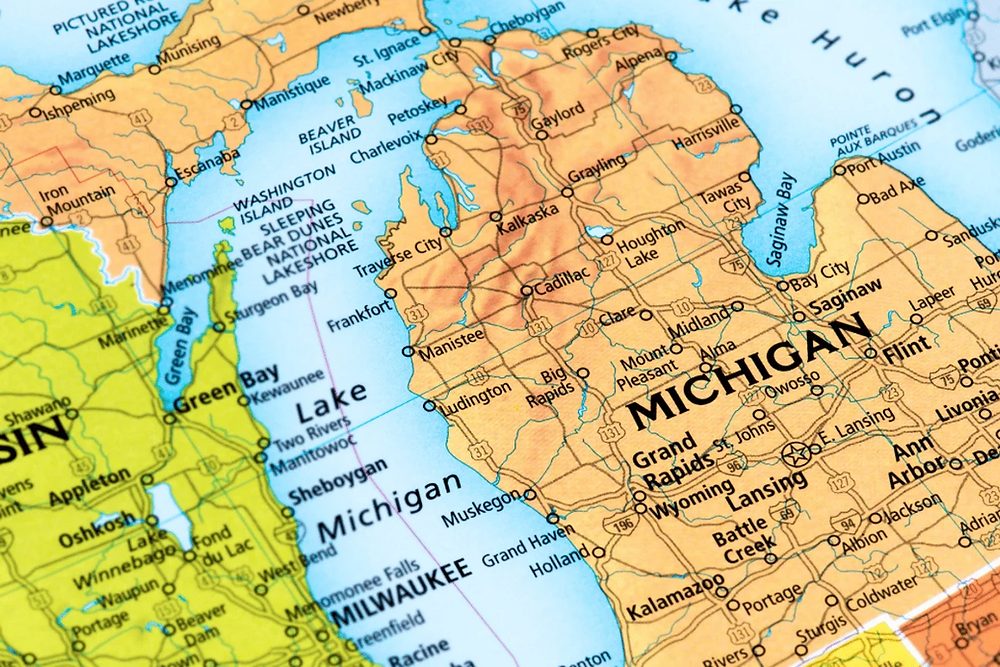
Michigan doesn’t get the same attention as Delaware, Texas, Nevada or California when it comes to business formation.
But for many businesses operating in the state, it’s a practical—and often a better choice.
The process is straightforward. The costs are reasonable.
What’s less discussed is what happens after you form the LLC.
Why businesses choose Michigan
For many companies, forming in Michigan simply makes sense:
-
You’re based there
-
Your operations are there
-
Your employees are there
-
You don’t expect to raise funds from out of state or professional investors
In those cases, forming locally avoids unnecessary complexity.
How to start an LLC in Michigan
The formation process is relatively simple.
Step 1: Choose a business name
Your name must:
-
Be distinguishable from existing entities
-
Include “LLC” or “Limited Liability Company”
Step 2: File Articles of Organization
This is done through the Michigan Department of Licensing and Regulatory Affairs (LARA).
-
Filing can be completed online
-
Processing times are typically fast
Step 3: Appoint a registered agent
Michigan requires appointing a registered agent, which maintains:
-
A physical address in the state
-
Availability during business hours
Step 4: Create an operating agreement
An operating agreement is not required, but it’s strongly recommended—especially if there are multiple members. Commercial partners and lenders may also need to see this document.
Step 5: Obtain an EIN
Needed for:
-
Taxes
-
Hiring
-
Opening a business bank account
What most Michigan LLC guides don’t tell you
The formation steps are simple. Most guides fail to point out that what follows is where many businesses run into issues.
1. Annual reporting is easy to overlook
Michigan requires an annual statement.
-
Due each year ( by February 15 for LLCs)
-
Missing it can impact your standing
It’s a small task, but an easy one to forget.
2. Growth can bring complexity quickly
At the beginning, your business consists of:
-
One entity
-
One member
-
In one state
As you grow:
-
You may expand into other states
-
Add new entities
-
Bring in a professional manager
-
Introduce partners or investors
Now the original Michigan LLC becomes part of a larger corporate structure
3. Multi-state operations change your requirements
If your business expands beyond Michigan, you may need to:
👉 Register as a foreign LLC in other states
This introduces:
-
Additional filings
-
Additional fees
-
Additional compliance obligations
4. Registered agent management becomes more important
At formation, it’s simple.
But over time:
-
As you registered in new states, you will need to appoint registered agents in those states
-
If you have multiple entities, you need to ensure consistency across them
What starts as a checkbox becomes an operational detail that needs to be managed.
5. Compliance becomes ongoing, not occasional
Most businesses underestimate this.
Compliance is not an isolated filing, it becomes an ongoing process of:
-
Maintaining good standing
-
Tracking deadlines
-
Keeping information current
What changes as your Michigan LLC scales
This is where the gap between “starting” a new business and “running” a continuing operation becomes clear.
More entities
You may:
-
Create additional LLCs
-
Separate business lines
-
Structure ownership differently
More jurisdictions
Expansion introduces:
-
Multi-state compliance
-
Different rules and deadlines
More ownership complexity
With growth:
-
Ownership structures evolve
-
Relationships become less straightforward
The difference between a simple LLC and a scalable structure
A single member Michigan LLC is easy to manage.
As the business expands, it requires a system.
Because now you need to track:
-
Multiple entities
-
Multiple states
-
Multiple requirements
How SingleFile supports Michigan-based businesses
SingleFile helps businesses manage their LLCs as they grow beyond formation.
That includes:
-
Tracking compliance across Michigan and other states
-
Maintaining registered agent coverage
-
Centralizing entity data
-
Supporting growth for more complex structures
The bottom line
Starting an LLC in Michigan is straightforward.
Managing the LLC as your business grows is not.
If you’re planning to scale, the question isn’t just how to start—it’s how to stay organized as complexity increases. See how SingleFile helps businesses manage compliance and entity growth. Request a Demo today.
External References:
Stay compliant. Stay informed.
Get compliance updates, filing guides, and regulatory alerts from SingleFile.